
How to Hire an Appliance‑Repair Pro in 2026 — No Lead Fees, Transparent Quotes, and Escrow‑Safe Payments
When your refrigerator stops cooling at 2 a.m., the last thing you want is a week‑long game of phone tag and a vague “$200‑plus” estimate that may never cover…
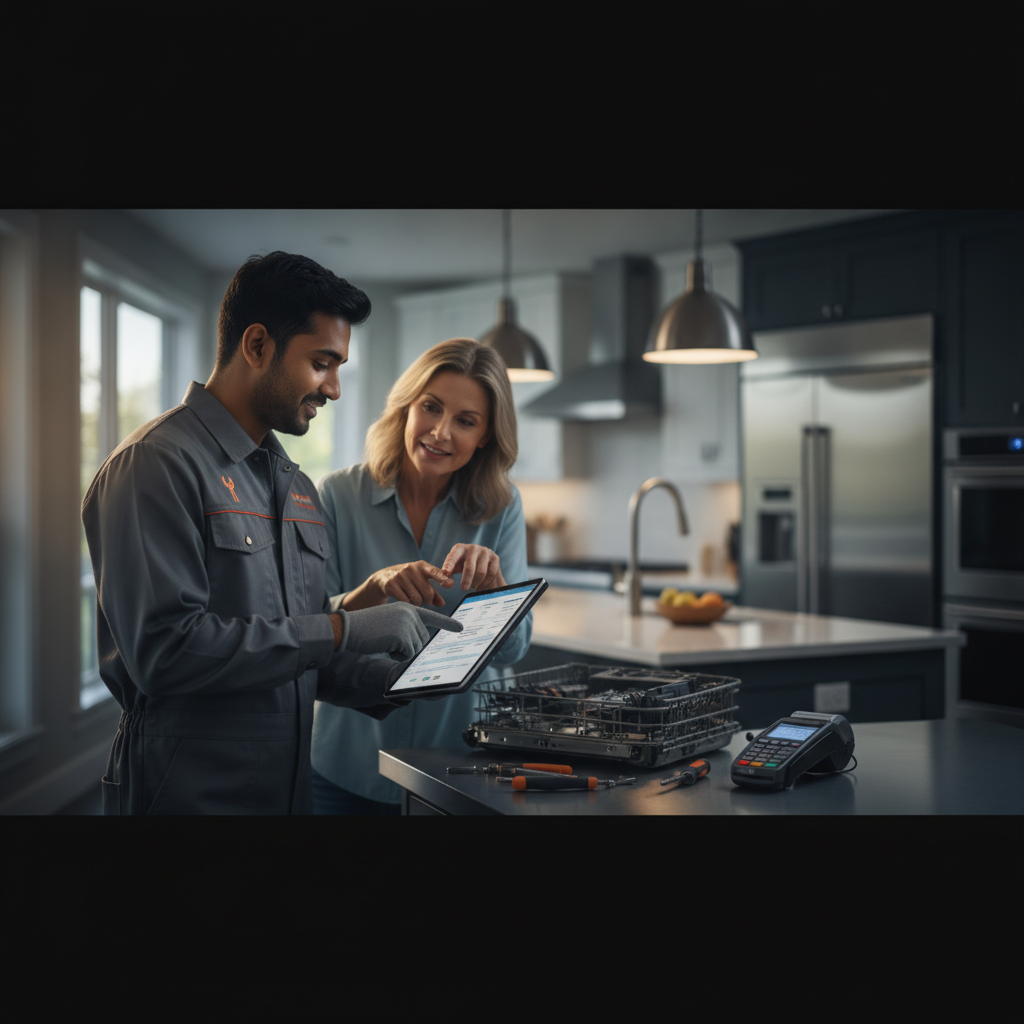
When your refrigerator stops cooling at 2 a.m., the last thing you want is a week‑long game of phone tag and a vague “$200‑plus” estimate that may never cover the repair. Homeowners today are fed up with endless back‑and‑forth, hidden lead‑fees, and unstructured quotes—pain points that show up in every consumer‑complaint survey and on Trustpilot reviews of legacy platforms. In this guide, we walk you through the modern appliance‑repair hiring process, expose where the old lead‑gen model breaks, and show how an AI‑native home services workflow and payments platform (PLMBR) eliminates the friction once thought unavoidable.
Pro‑Tip: Before you even search for a technician, snap a clear photo of the faulty appliance and note any error codes. PLMBR’s conversational AI can turn that single image into a fully‑qualified job request in seconds.
What Homeowners Need To Know About Appliance Repair
Appliance repair covers a wide range of trades—refrigerators, dishwashers, washers/dryers, ovens, and even specialty units like wine coolers. Each has its own failure modes, parts availability, and labor intensity. Understanding the basics helps you assess quotes and avoid surprise costs.
- Diagnostic fees are common – most technicians charge $75 – $120 just to diagnose the problem, though many waive this fee if you proceed with the repair.
- Repair costs vary by appliance – nationwide averages (2024‑2025 data) show:
- Refrigerator: $150 – $400
- Dishwasher: $120 – $250
- Washer/Dryer: $130 – $300
- Oven/Range: $150 – $350
- Warranty and insurance matters – In New York, Massachusetts, and Pennsylvania, state licensing boards now require contractors to provide proof of liability insurance and a current contractor’s license before they can be listed on any reputable platform.
Knowing these benchmarks equips you to spot outliers—a quote that’s $800 for a simple dishwasher fix is a red flag.
Cost / Risk / Hiring Reality
Below is a snapshot of the typical financial landscape for appliance‑repair projects in the Northeast corridor (NY, MA, PA). All figures are average ranges drawn from industry surveys and the US Home Services price guide.
| Appliance | Diagnostic Fee | Typical Repair Range* | Lead‑Fee Cost (if using a pay‑per‑lead platform) | Escrow‑Ready Payment (PLMBR) |
|---|---|---|---|---|
| Refrigerator | $75 – $120 | $150 – $400 | $30 – $150 per qualified lead | 0 % lead‑fee; funds held until job completion |
| Dishwasher | $75 – $120 | $120 – $250 | $30 – $150 | 0 % |
| Washer/Dryer | $75 – $120 | $130 – 300 | $30 – $150 | 0 % |
| Oven/Range | $75 – $120 | $150 – 350 | $30 – $150 | 0 % |
Scroll to see all columns →
*Ranges reflect labor plus parts; they exclude premium “same‑day” service surcharges.
Key takeaways
- Diagnostic fees alone can equal half the total repair cost for smaller jobs.
- Lead‑fees are a hidden expense for homeowners—many platforms pass the cost indirectly through higher hourly rates.
- Escrow‑backed payments (as offered by PLMBR via Stripe Connect) protect both parties: the homeowner’s funds are held securely until the work is verified, and the provider receives payment only after completion.
How To Vet Providers Without Getting Burned
The old “search‑and‑call” method leaves you vulnerable to unlicensed handymen, surprise bills, or technicians who simply disappear. Follow this checklist to ensure you hire a qualified, reliable pro:
-
Verify licensing and insurance
- Ask for a copy of the state contractor’s license. In New York, the Department of Labor maintains an online license lookup.
- Confirm liability insurance and workers’ comp—PLMBR’s compliance dashboard automatically flags expired documents.
-
Check reviews and ratings from multiple sources
- Trustpilot shows Thumbtack’s rating at 2.2/5, with recurring complaints about dead leads and ghosting.
- BBB complaints against Angi highlight lead‑fee opacity and poor post‑job support.
-
Demand a structured, line‑item quote
- A proper booking packet lists each part, labor hour, and any applicable taxes. Vague “flat‑rate” numbers often hide markup.
-
Ask about warranty on parts and labor
- Reputable technicians stand behind their work with at least a 90‑day labor guarantee and manufacturer warranty on replaced parts.
-
Confirm payment method
- Avoid cash‑only arrangements. Platforms that integrate Stripe escrow let you release funds only after you approve the completed work.
By applying this vetting process, you dramatically reduce the risk of the “ghosting” scenario that 27 % of contractors cite as the reason they quit lead‑gen platforms (2025 industry survey).
Where The Old Workflow Breaks
Even after you’ve vetted a provider, the traditional lead‑gen workflow introduces friction at every stage:
| Stage | Typical Pain Point | Real‑World Example |
|---|---|---|
| Intake | Phone‑tag, vague description | Homeowner spends 3‑4 hours calling multiple listings before a tech finally “gets” the issue. |
| Matching | Keyword‑based search, irrelevant results | A “dryer repair” search returns plumbers and HVAC contractors because the platform lacks semantic understanding. |
| Quoting | Unstructured estimates, hidden fees | Provider says “$250 total” but later adds a “diagnostic surcharge” of $80. |
| Scheduling | Calendar mismatch, double‑booking | Technician promises a 2 p.m. slot, then shows up at 4 p.m. after a prior job overruns. |
| Payment | Up‑front cash, no escrow | Homeowner pays $300 before work begins, then discovers the part needed costs an additional $150. |
| Dispute | No clear resolution path | A homeowner files a complaint with the platform, but the process drags for weeks with no mediation. |
Scroll to see all columns →
These breakdowns are systemic—they stem from the pay‑per‑lead business model that forces providers to chase low‑quality leads, while homeowners shoulder the cost of endless coordination. The lead‑fee model, which can range from $30 – $150 per lead, incentivizes quantity over quality, leading to the “dead lead” phenomenon documented across Thumbtack and Angi reviews.
How PLMBR Changes This Workflow
PLMBR re‑architects the entire appliance‑repair journey with AI‑driven matching, structured booking packets, and escrow‑backed payments. Below is a step‑by‑step comparison of the legacy flow versus the PLMBR flow.
| Step | Legacy Platform | PLMBR Experience |
|---|---|---|
| 1️⃣ Intake | Homeowner types a short description; platform asks generic follow‑up questions. | Conversational AI Intake – Describe the issue in plain English, attach a photo, and the AI instantly identifies the trade, urgency, and location. |
| 2️⃣ Matching | Keyword search returns dozens of unrelated providers. | Semantic Search & Matching – Vector embeddings surface the top‑fit technicians based on trade, distance, availability, and trust signals. |
| 3️⃣ Outreach | Homeowner manually calls or messages each provider. | Seeker AI Agent (Premium) – One click launches an AI agent that contacts multiple vetted providers simultaneously, tracks each response, and surfaces status updates in a single view. |
| 4️⃣ Quote Generation | Providers send hand‑written PDFs or vague email estimates. | AI Booking Packet Builder – Generates line‑item quotes, auto‑populates parts pricing from market data, and attaches terms & conditions directly in the chat thread. |
| 5️⃣ Comparison | Homeowner juggles PDFs, spreadsheets, or phone notes. | Booking Packet Comparison – Side‑by‑side view of structured quotes, with clear totals, milestones, and warranty info. |
| 6️⃣ Scheduling | Manual calendar sync; double‑bookings are common. | Calendar Integration – Syncs with Google Calendar/Outlook; availability is reflected in real‑time ranking. |
| 7️⃣ Payment | Up‑front cash or unsecured credit‑card hold. | Escrow‑Backed Stripe Flow – Funds are authorized, held, and released only after the homeowner confirms job completion. |
| 8️⃣ Dispute Resolution | Long email chains, no mediation. | AI‑Mediated Dispute System – Automated evidence packs, tiered resolution, and recommended actions reduce resolution time from weeks to days. |
Scroll to see all columns →
Real‑World Screenshot Highlights
- seeker_agent_outreach.png – Shows the AI agent reaching out to multiple providers with per‑provider status badges.
- compare_packets.png – Visual side‑by‑side packet comparison, each line‑item clearly broken out.
- messages_billing_request.png – In‑chat progressive billing request, tied to milestones.
These UI elements embody PLMBR’s promise: no lead fees, transparent pricing, and a single pane of glass for the entire repair lifecycle.
Questions To Ask Before Hiring
Even with PLMBR’s safeguards, asking the right questions empowers you to make an informed decision.
-
Do you have a current state contractor’s license and liability insurance?
- Verify via the platform’s compliance badge or request a copy.
-
Can you provide a detailed booking packet with line‑item pricing?
- Look for parts, labor hours, taxes, and any warranty terms.
-
What is your policy on progressive billing for larger jobs?
- Milestone payments protect you from paying the full amount before work is done.
-
How do you handle parts that become unavailable after the job starts?
- A reputable pro will notify you promptly and provide approved alternatives.
-
What is your dispute resolution process?
- PLMBR’s AI‑mediated system should be highlighted; ask for the escalation path.
-
Do you sync your schedule with a digital calendar?
- Integration with Google Calendar or Outlook reduces the chance of double‑booking.
By documenting answers within PLMBR’s messaging thread, you retain a searchable record that can be referenced if issues arise.
Conclusion
The appliance‑repair market is still shackled to a broken lead‑gen model that burdens homeowners with phone‑tag, hidden fees, and vague estimates. Research shows that lead‑fee costs ($30‑$150 per lead) and provider churn (27 % annually) are direct symptoms of this broken workflow. Meanwhile, AI‑driven matching can boost conversion rates by 32 % compared to keyword search, delivering faster, higher‑quality matches.
PLMBR flips the script: an AI‑native workflow that eliminates lead fees, provides structured booking packets, secures payments with Stripe escrow, and offers AI‑mediated dispute resolution. The result is a single, transparent, and trustworthy journey from the moment you snap a photo of your broken fridge to the moment you confirm the repair is complete and the funds are released.
Ready to ditch the old phone‑tag cycle? Visit the PLMBR homepage, explore Appliance Repair pros on PLMBR, and compare quotes today. Your home deserves a repair experience that’s as modern as the appliances you rely on.
External Resources
- US Home Services – Appliance Repair Service – pricing benchmarks and common issues.
- Appliance Solutions – Top Questions to Ask Before Hiring an Appliance Repair Technician – buyer‑education checklist.
- Trustpilot – Thumbtack Reviews (2.2/5) – real contractor complaints about lead‑gen.
- Better Business Bureau – Angi Complaints – documented lead‑fee grievances.
- PHCC Blog – National Marketing Scam Threatens Licensed Contractors – industry analysis of lead‑gen scams.
Empower your home, streamline your repair, and never chase a quote again—thanks to AI, escrow, and a workflow built for today’s homeowner.